


CENTENNIAL FAMILY UPDATE
Dear Centennial Families,
It is hard to believe we are already into the middle of November! With the chilly temperatures expected for this week, we encourage our students to dress appropriately for the weather. Coats, hats/toques, and gloves/mittens are encouraged!
Remembrance Day
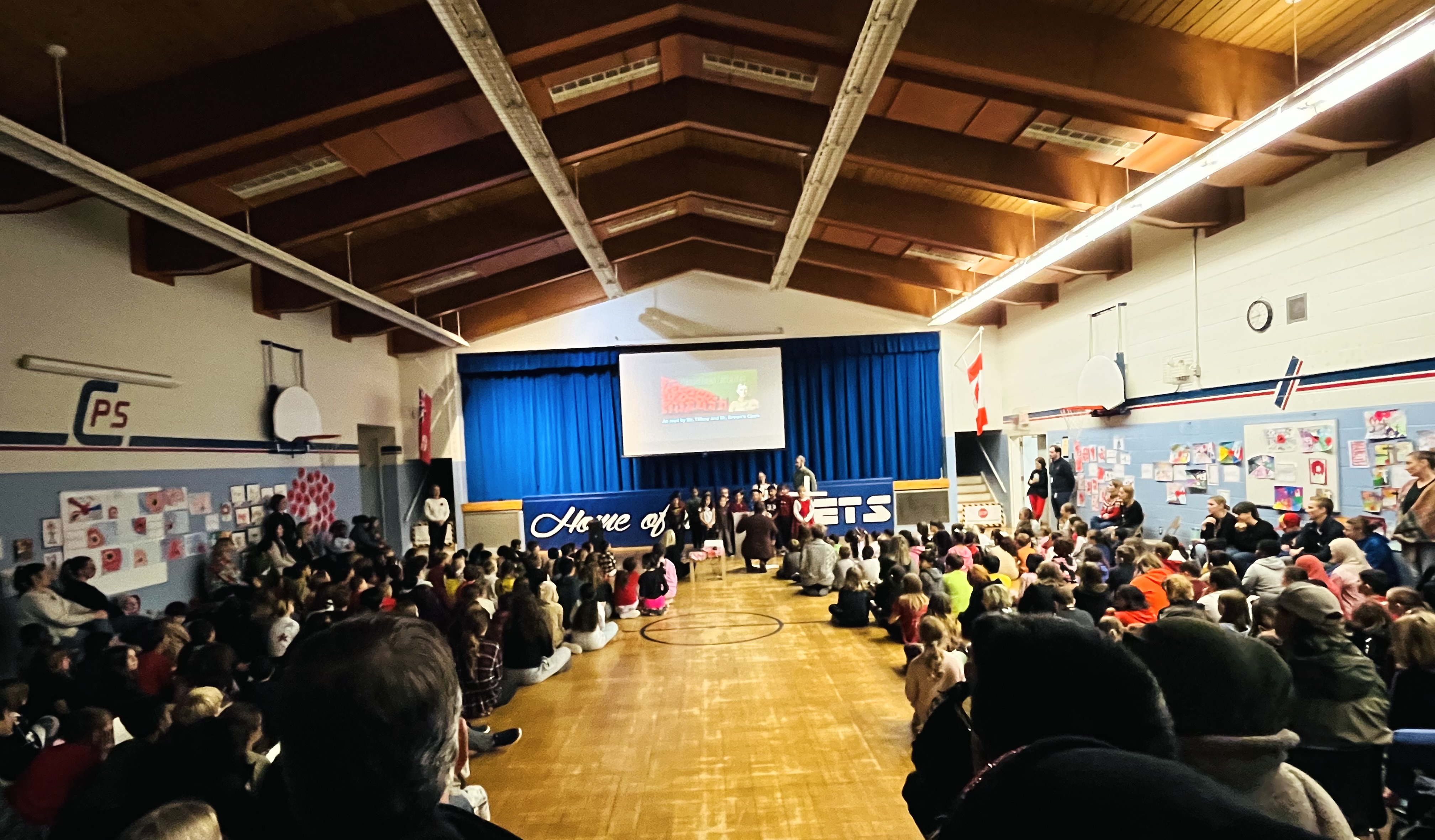
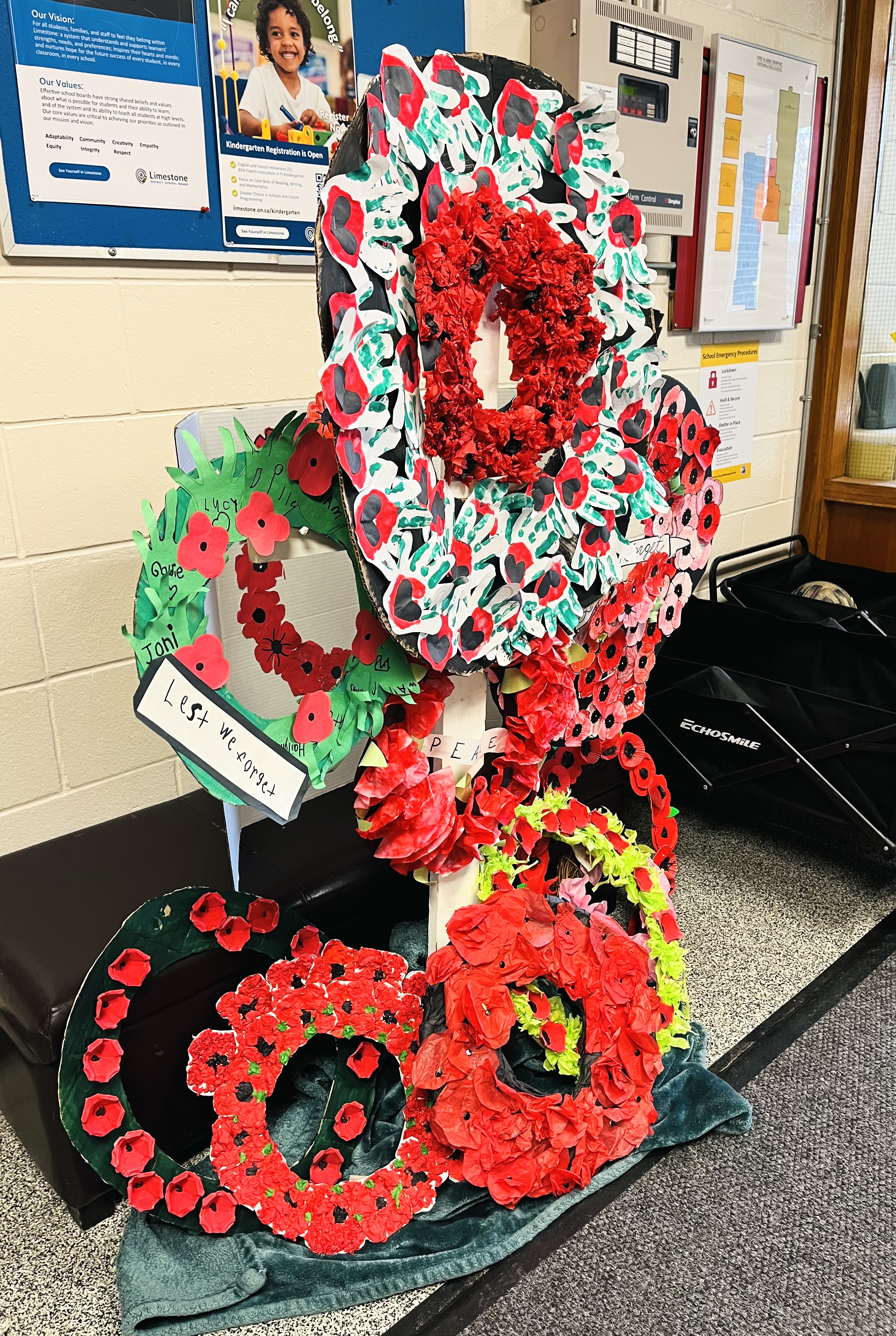
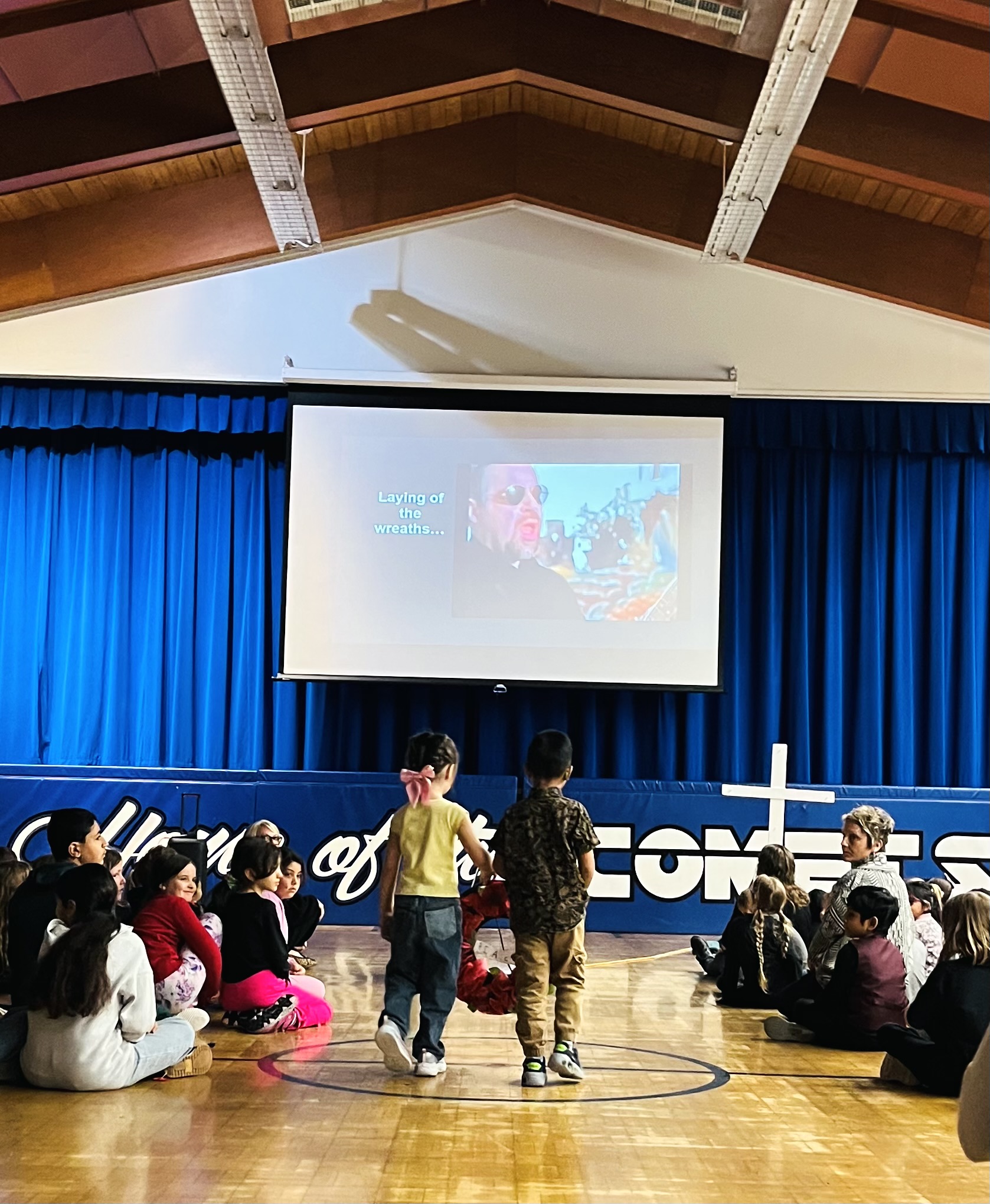
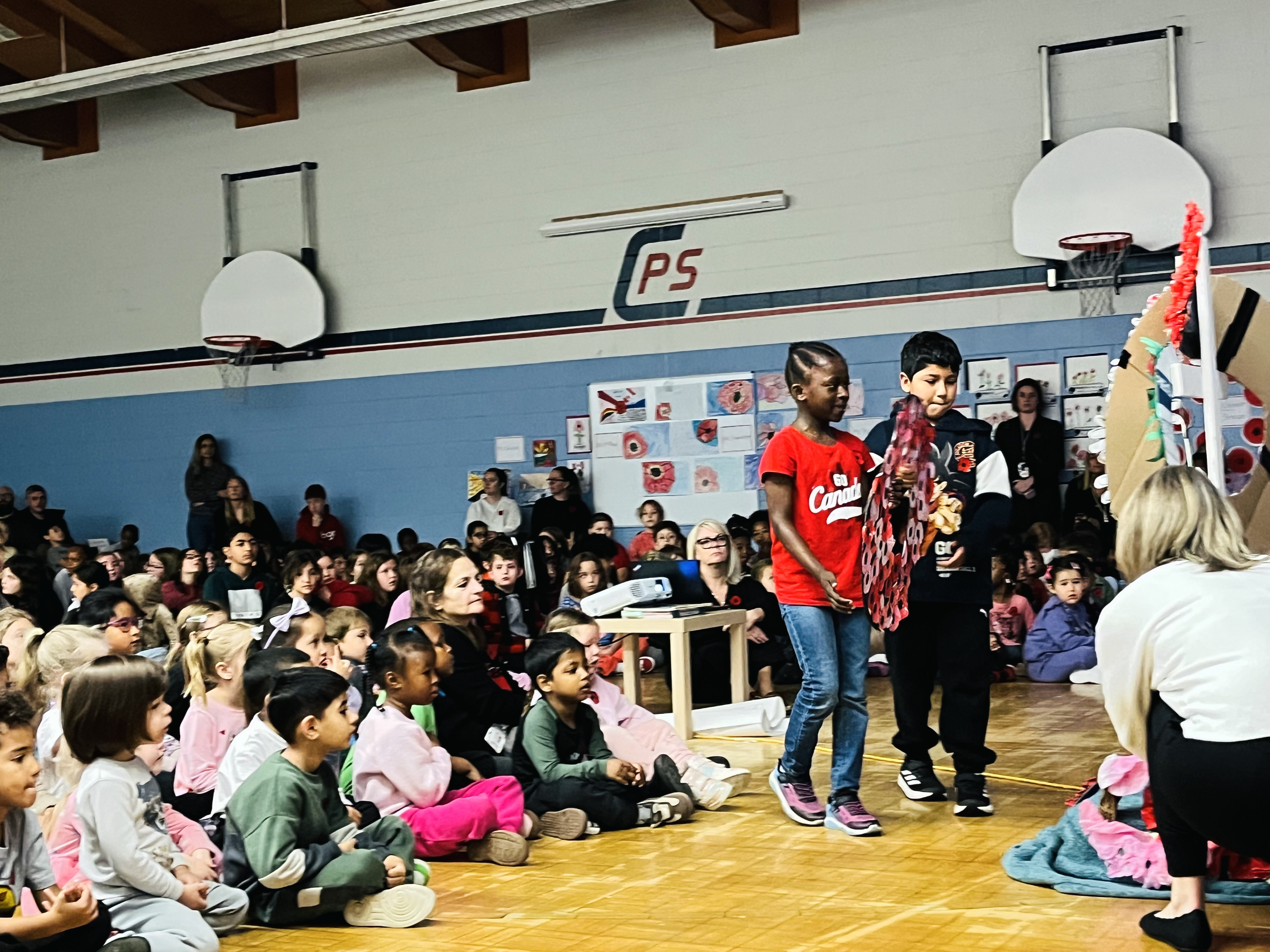
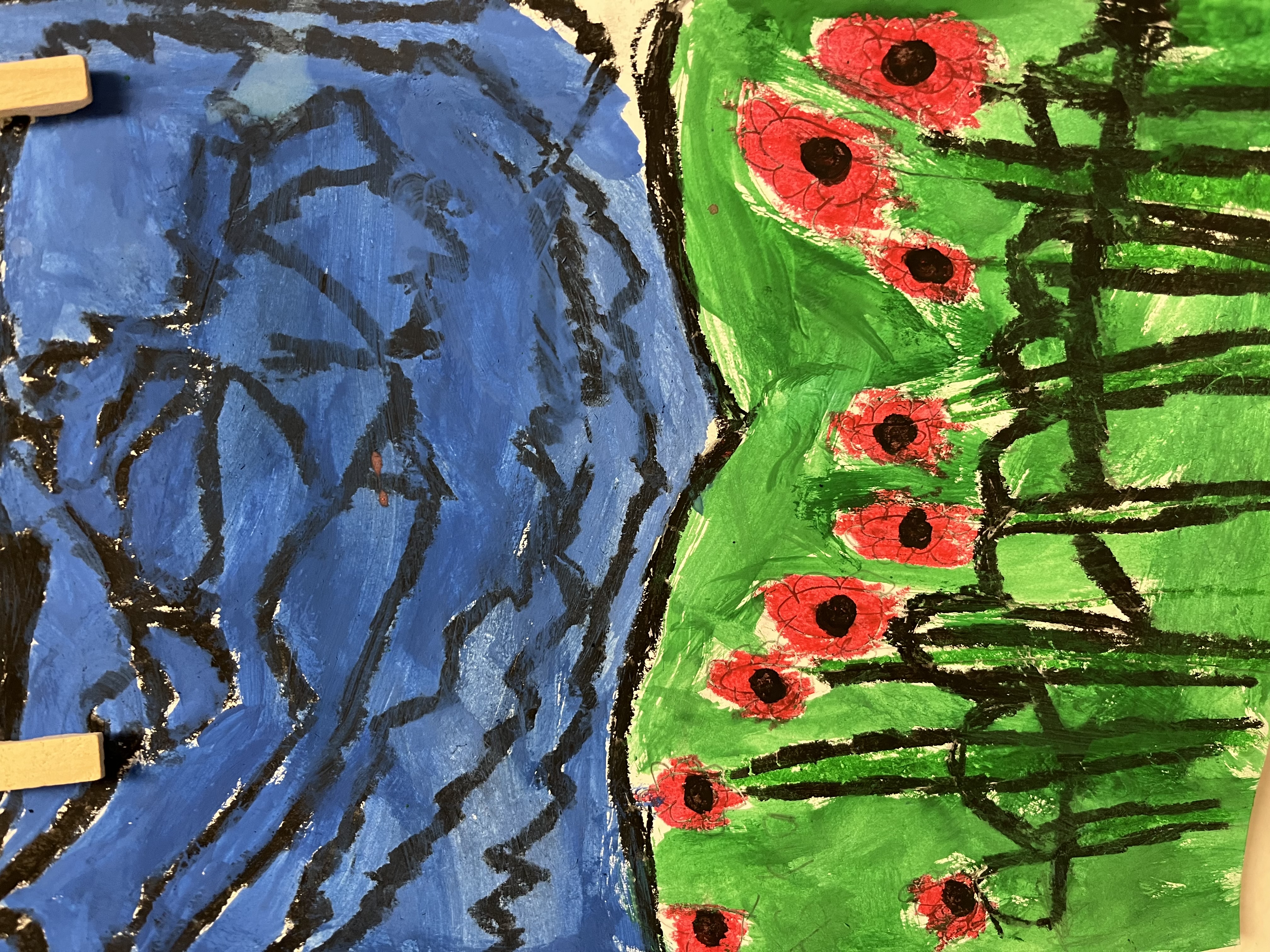
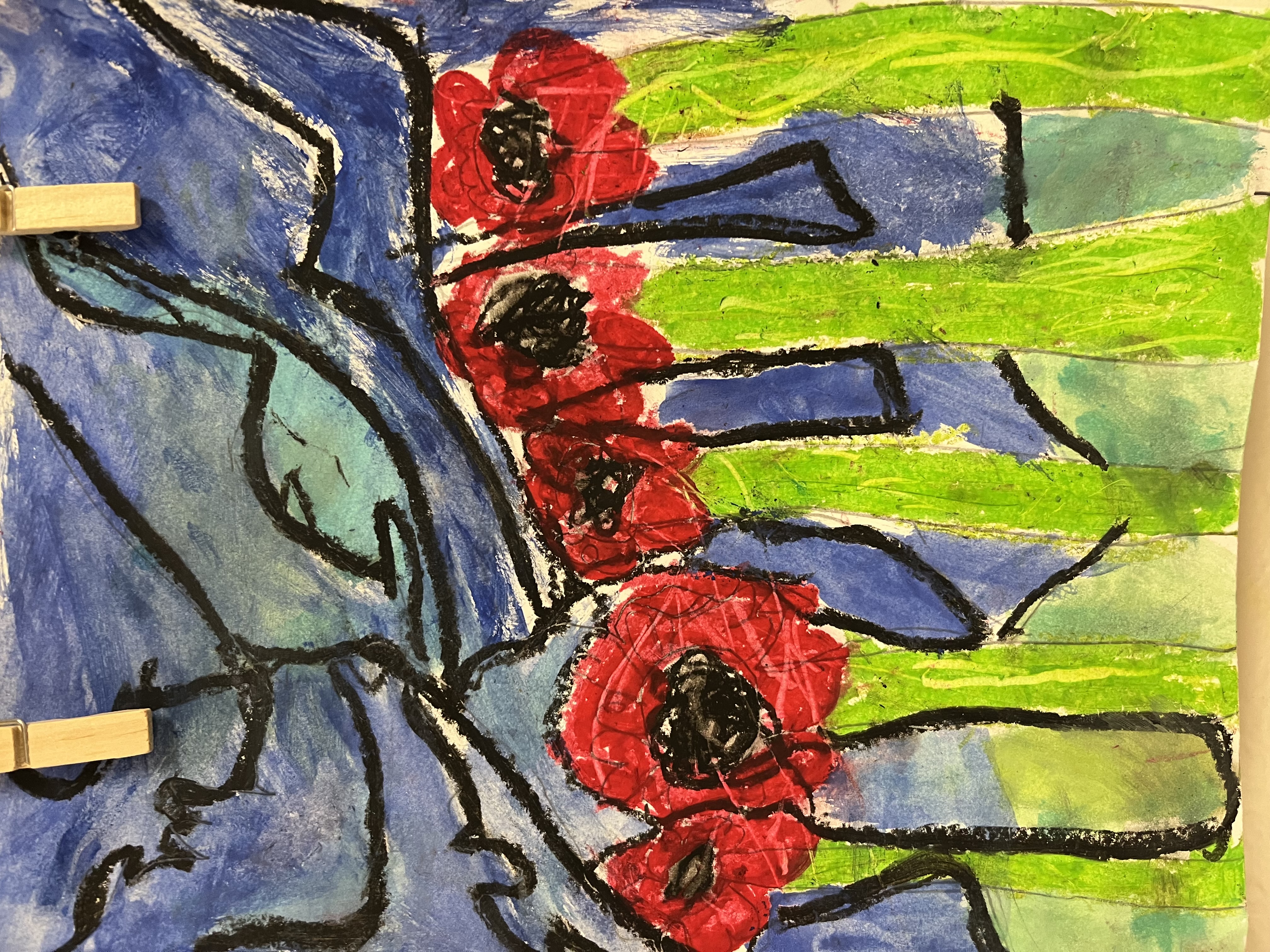
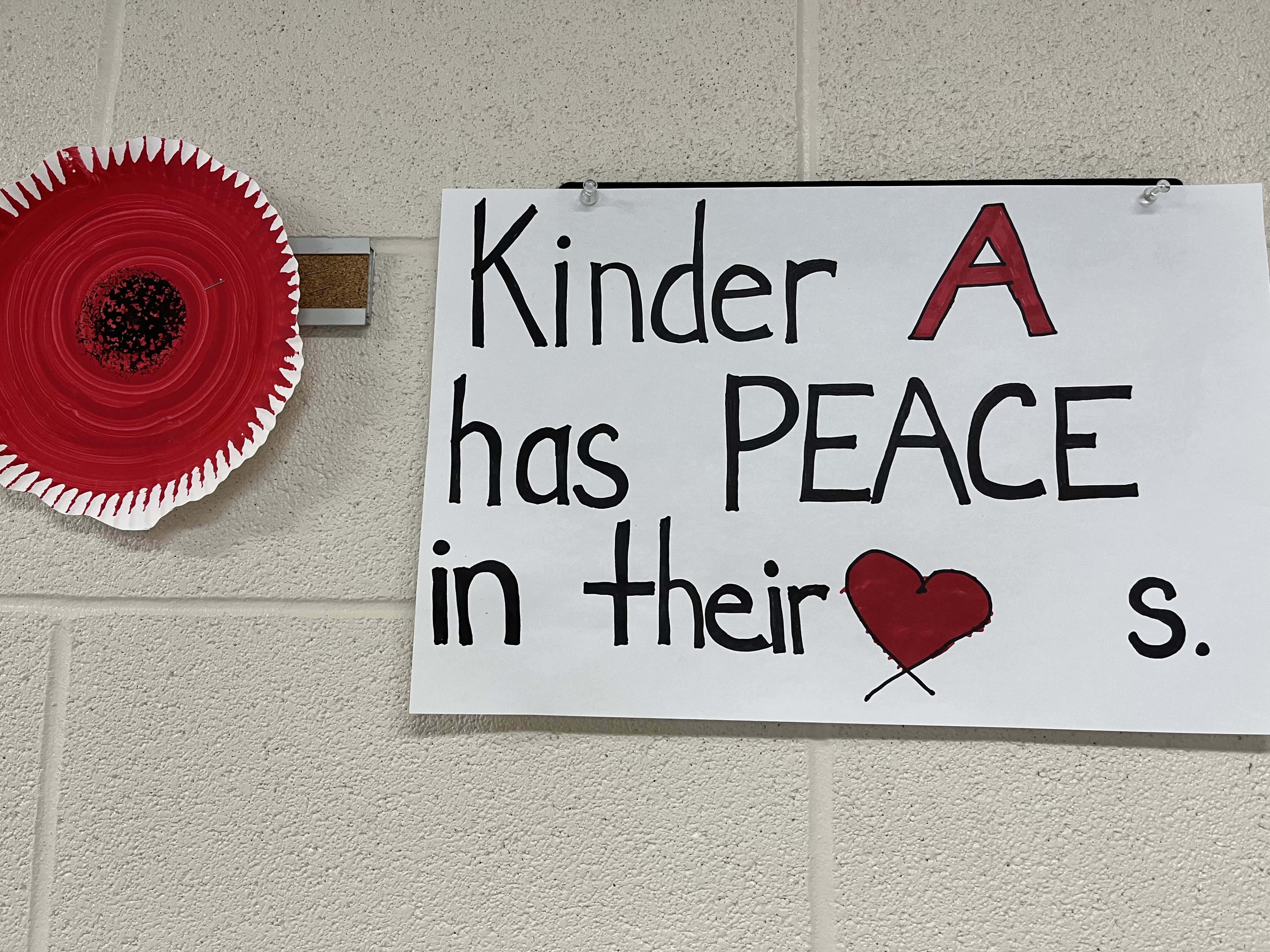
Thank you to our staff organizers, presenting classes, and student artists for coming together for collective reflection on Remembrance Day. It was wonderful to welcome families and community members to the morning service. We took time to honor and reflect upon the courage, service, and sacrifice of individuals who have served and continue to serve Canada during times of war, military conflict, and peacekeeping.
Administrator Coverage
We will be welcoming two retired administrators to Centennial while Ms. Fox is on medical leave.
- Ms. Joanne Borgess - Nov 16 - Dec 1
- Mr. Mark Ryan - Dec 2-Dec 18.
We are fortunate to have the consistency of Ms.Bocking maintaining her regular schedule at Centennial. Ms. Fox will be returning in the new year.
Progress Reports
Student Progress Reports and Communication of Learning went home on Friday with your student. These early snapshots indicate a child's progress in the first part of the semester, and share next steps for focused growth during the remainder of the term.
This is an excellent opportunity to talk to your child about what they are doing really well at school, and what goals they may have for the rest of the year. Please reach out to your child's teacher or the office if you have any questions.
Early Reading Screeners
Families of students in Senior Kindergarten to Grade 2 whose reading composite scores are below or well below grade-level benchmarks will receive a letter alongside their child's Progress Report outlining these results.
We are committed to identifying student strengths and needs early so that we can provide timely support and targeted instruction. Reading screening is one of the many tools we use to help ensure every child receives the support they need to become a confident and successful reader.
A reminder that Friday is a PA Day and there is no school for students. Staff will be engaging in professional learning activities throughout the day.
Looking forward to another great week at Centennial!
Ms. Fox, Ms. Bocking and your Centennial Staff
Snapshot of the week @ Centennial
Date | Day | What's Happening |
|---|---|---|
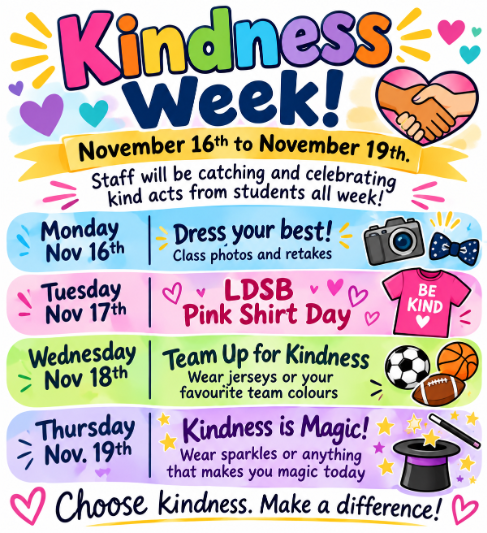
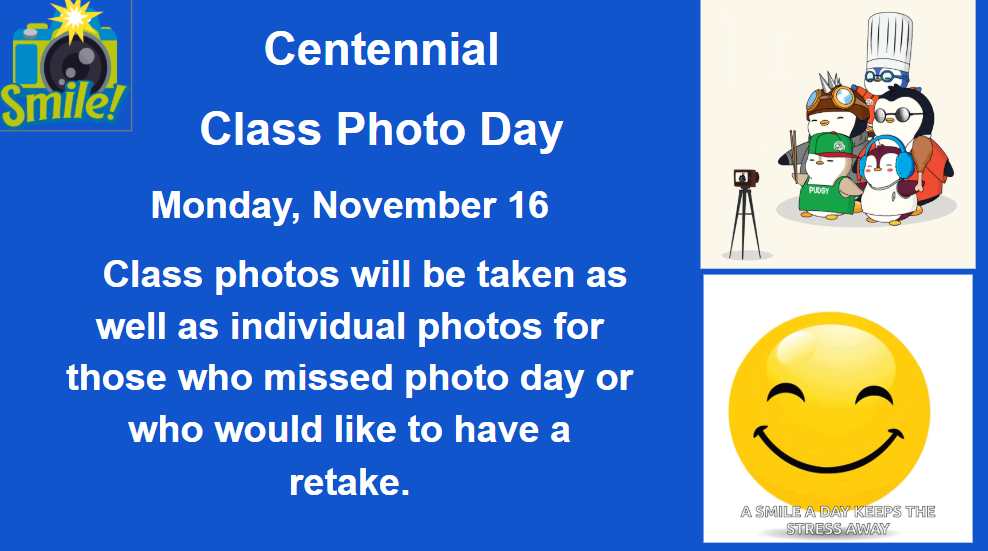
Mon Nov 16 | 1 |
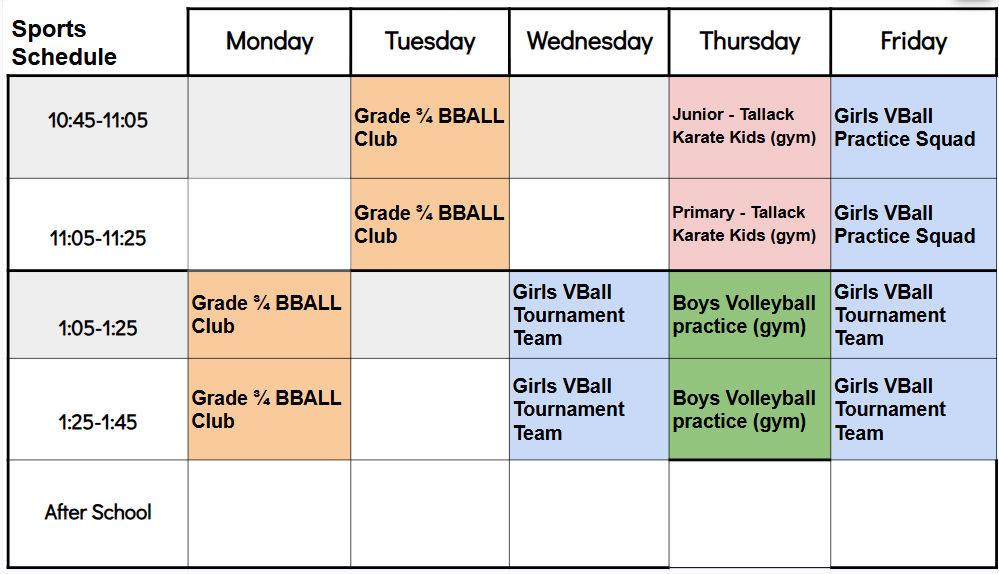
|
Tues Nov 17 | 2 |
|
Wed Nov 18 | 3 |
|
Thurs Nov 19 | 4 |
|
Fri Nov 20 | 5 | PA DAY NO SCHOOL FOR STUDENTS |
Jingle Bell Run/Walk/Wheel and Food Drive
Every December, we run a food drive that ends with our Jingle Bell Run/Walk/Wheel. On Friday, December 4, the whole school will participate in a festive fit break in the afternoon, and enjoy hot chocolate served by staff and a candy cane donated by our SAC. Ahead of that, the week of Nov. 30 - Dec. 4 we are collecting donations of non perishable food items to support our local community. Thank you in advance for your support!

DID YOU KNOW ABOUT THE HIVE?
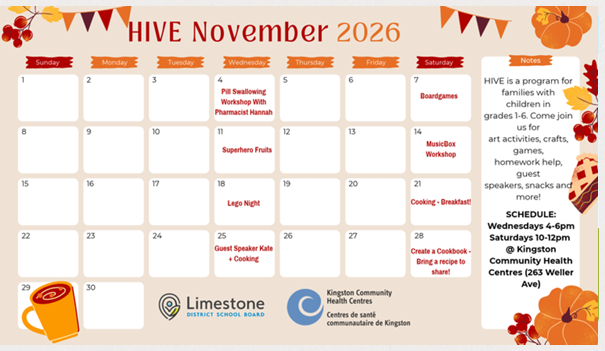
HIVE is a free program for kids in Grades 1–6 and their caregivers, designed to help families connect, recharge, and have fun together.
Enjoy a welcoming space where families can meet local clinicians and family experts in an informal, supportive setting — while kids take part in sports, games, and creative activities. Snacks and refreshments are provided!
Take a break and recharge — while your kids play, explore, and make new friends.
HIVE activities run twice a week, so there are plenty of opportunities to join for programs after school as well as weekends. See this link for additional opportunities for families and caregivers.
Community Resources - UMOJA Hub
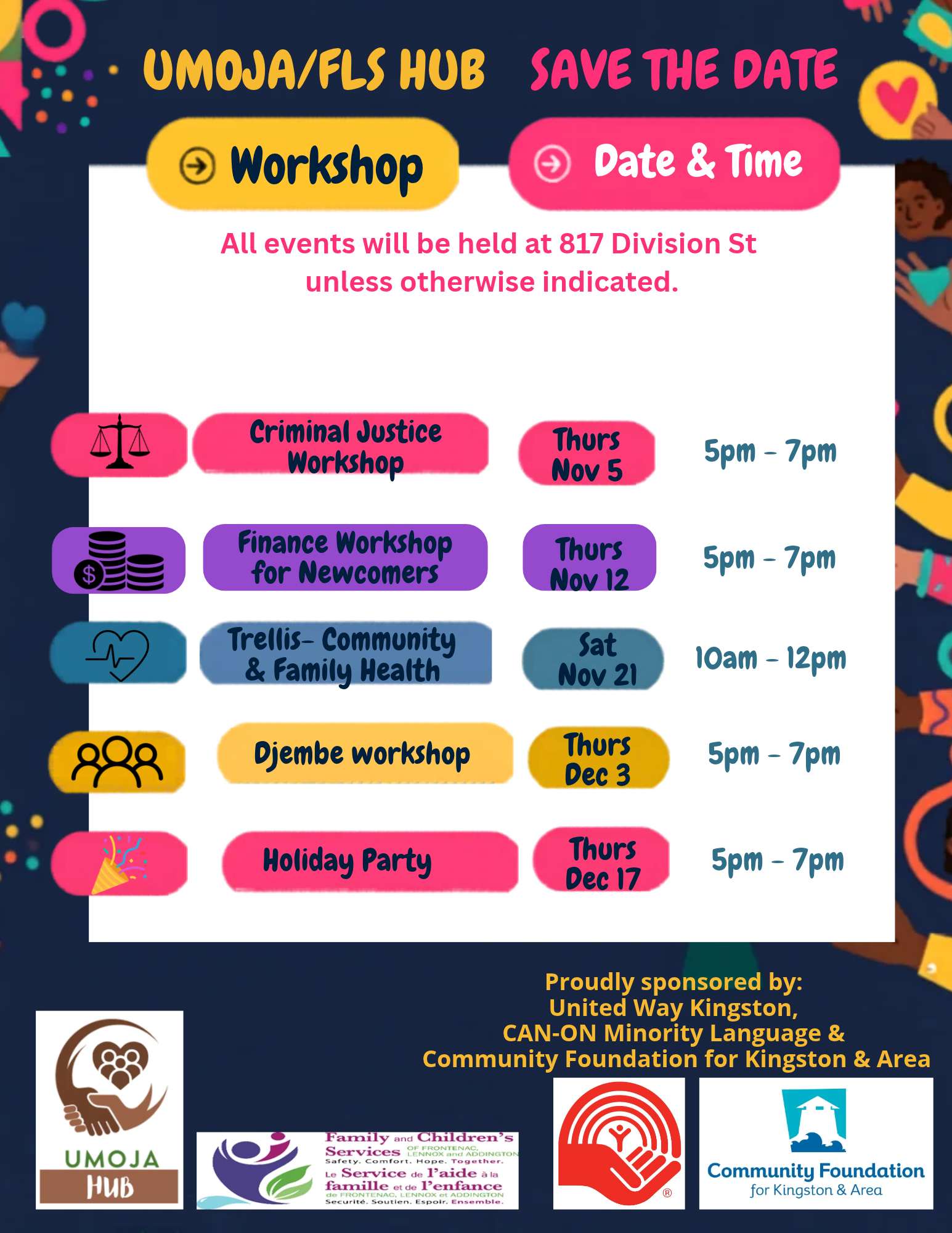
The Umoja Hub in Kingston is a community gathering place and programming space grounded in Afrocentric service delivery for Black and Francophone families. Below is information about upcoming events. The link to register for the Criminal Justice Workshop is: Register for Criminal Justice Workshop.
CREATING BALANCE IN A DIGITAL WORLD
Digital wellness helps children develop healthy, balanced habits with technology and screen time. As students explore digital wellness at school, we want to share a few simple ideas families can try at home. By listening, learning together, and keeping communication open, we can help children develop a healthy relationship with technology.
WHY DIGITAL WELLNESS MATTERS
Digital wellness can help children:
- Develop healthy habits and daily routines
- Get enough sleep and enjoy restful evenings
- Balance online activities with offline experiences
- Build face-to-face connections
- Make time for physical activity, hobbies, and outdoor play
- Reflect on their technology use and make thoughtful choices
SUPPORTING DIGITAL WELLNESS AT HOME
- Monitor screen time: Use built-in device features to help track and manage screen time.
- Create a screen-free zone: Choose a time or place, such as mealtimes or bedrooms, where devices are put away.
- Try a 60-minute wind-down: When possible, aim for screen-free time during the hour before bed. Encourage relaxing alternatives such as reading, talking, or listening to music.
RESOURCES FOR CAREGIVERS
- Centre for Healthy Screen Use - Canadian Paediatric Society
- Helping Your Child Manage Digital Technology
- Digital Literacy Resources for Parents
Cell Phones in Schools

When can students use a mobile device: If a student is in Grade 6 and below, they can bring a mobile device to school but will only be able to use it before and after school.
What parents/caregivers can do: You can teach your student about finding a healthy balance in using technology by limiting screen time at home. You can also:
- Read Media Smarts’ tips for managing your kids’ screen time
- Explore Centre for Addiction and Mental Health’s (CAMH’s) services and resources if you have concerns about your child’s use of technology
- Explore OntarioSchool Mental Healthresources to help you manage your child’s screen time

School Trips and CPICs for Volunteers
For the safety of our students and school community, all volunteers are required to have a recent vulnerable sector police check completed within 6 months of their volunteer start date. Existing CPICs are valid for 5 years.
To help make the process easier, we will provide prospective volunteers with a letter to take to the police detachment that serves the area where they live.
Once you receive your completed police record check, please upload it to the LDSB Police Record Check Portal. Human Resources will review the record check and will contact you if any additional information or follow-up is required. Thank you for helping us create a safe and welcoming environment for all of our students!

Indigenous Self-Identification
The Limestone District School Board (LDSB) invites students to voluntarily and confidentially self-identify as Indigenous. Elementary and secondary students with First Nations, Métis, and/or Inuit ancestry can self-identify HERE.
School board self-identification is based on any degree of Indigenous ancestry (Status, Non-Status, Métis citizenship, etc.). Self-identification can be withdrawn at any time. LDSB, in accordance with the Ministry of Education, Ontario, does not require proof of identity to self-identify. Indigenous Self-Identification

Concussion Protocol
LDSB is committed to helping all students succeed and lead safe, healthy, and active lives. As part of its commitment to student safety, injury prevention, and well-being, the Ministry of Education supports concussion awareness, prevention, identification, management, tracking, and training in schools through legislation, policy, and resources. Click HERE for more information on the LDSB website.
The office calls home for all students who have a head injury/suspected concussion. If a student has one or more symptoms of a concussion, they will not participate in any physical activity (i.e., physical education, DPA, recess) until cleared (signed off) by a caregiver and/or medical professional using Form 142-D: Documentation of Medical Examination. We encourage all students with symptoms of a concussion to be picked up from school and monitored by a caregiver and assessed by a medical professional.
The Concussion Protocol has been updated to align with the Canadian Guideline on Concussion in Sport (2024) and current international concussion guidance. The changes simplify the Return to Learn (RTL) and Return to Physical Activity (RTPA) process and support a safe, gradual, symptom-informed return to school and activity.
Key changes include:
• Simplified RTL and RTPA stages: Several stages have been combined to create a clearer and more consistent progression for students, families, and staff. • Earlier return to school: Students may return to school as early as Stage 2, with appropriate supports and monitoring of symptoms.
• Symptom-informed progression: Mild and brief increases in symptoms during Stages 1–3 may be acceptable if symptoms resolve within one hour.
• Earlier medical clearance: Medical clearance from a medical doctor or nurse practitioner is required after successful completion of RTPA Stage 3 and before beginning Stage 4.
• Symptoms after medical clearance: If symptoms return during Stages 4–6, the student must return to Stage 3 and be reassessed by a medical doctor or nurse practitioner.
• School responsibility: The designated lead is responsible for monitoring the student's progression through the RTL/RTPA stages and ensuring medical clearance is received before Stage 4.
• Parent/guardian responsibility: Parents/guardians are responsible for communicating changes in symptoms and providing written medical clearance following RTPA Stage 3.
HOW CAN I SUPPORT MY CHILD AT HOME?

Is your child struggling with self-regulation? Learning to wait? Managing big emotions? It can be difficult to know where to start. Families who are looking to support their child's positive engagement at school may find the resources below helpful.
- THE OT CLASSROOM - see this site for resources and tip sheets that offer strategies for both home and school
- MALTBY VIDEO VAULT - offers short videos linked below on the following topics. The Maltby Website also offers additional resources, links as well as in-person student programs and workshops for parents/caregivers.
- Autism Services at Maltby Centre (15 minutes)
For the past 30+ years Maltby Centre has been the leading provider of evidence-based Applied Behaviour Analysis (ABA) in the KFLA area. We offer a variety of services for children and youth with autism spectrum disorder (ASD). - How to Shape a Behaviour (8 minutes)
For the past 30+ years Maltby Centre has been the leading provider of evidence-based Applied Behaviour Analysis (ABA) in the KFLA area. We offer a variety of services for children and youth with autism spectrum disorder (ASD). Our services are individualized for family, youth, and child’s needs. Under the Ontario Autism Program (OAP) we offer Foundational Family Services which are publicly funded to help support building family capacity.
As a result of participating in this workshop, you will:
• Understand how new behaviours develop
• Learn how to define a target behaviour
• Learn how to break down a behaviour into smaller steps
• Learn how to shift reinforcement from one step to another - Preventing Crisis and Supporting Big Emotions (22 minutes)
It can be hard when big emotions happen. This workshop is designed to help caregivers support their children in ways that encourage regulation and make behavioural escalation less likely to occur. Through examples of common scenarios, we will discuss practical and helpful ways to use these strategies in real life.
As a result of participating in this workshop, you will be able to:
• Identify strategies to prevent behavioural escalation and encourage regulation
• Identify strategies to de-escalate big emotions safely in the moment - Why Use Visual Supports (14 minutes)
In this workshop, participants will receive a short presentation on the use of visual support to help teach children/youth with ASD, skills and independence. Participants will have an opportunity to ask questions and participate in group discussions.
As a result of participating in this workshop, you will be able to:
• Describe what visual supports are.
• Explain why visual supports can help your child/youth learn new skills or develop independence.
• Identify how to use visual supports to aid in your child/youth’s development. - Functions of Behaviour (39 minutes)
For the past 30+ years Maltby Centre has been the leading provider of evidence-based Applied Behaviour Analysis (ABA) in the KFLA area. We offer a variety of services for children and youth with autism spectrum disorder (ASD). Our services are individualized for family, youth, and child’s needs. Under the Ontario Autism Program (OAP) we offer Foundational Family Services which are publicly funded to help support building family capacity.
As a result of participating in this workshop, you will:
• Understand the ABCs of your learner’s behaviour
• Understand positive and negative reinforcement
• Understand and be able to label the 4 functions of behaviour
• Understand what antecedent and consequence strategies are
• Understand your role in your learner’s behaviour - Reinforcement: The Why, What and How’s of Reinforcing Behaviour (23 minutes)
For the past 30+ years Maltby Centre has been the leading provider of evidence-based Applied Behaviour Analysis (ABA) in the KFLA area. We offer a variety of services for children and youth with autism spectrum disorder (ASD). Our services are individualized for family, youth, and child’s needs. Under the Ontario Autism Program (OAP) we offer Foundational Family Services which are publicly funded to help support building family capacity.
As a result of participating in this workshop, you will:
• Understand how behaviour is learned
• Understand what reinforcement is and how it can affect behaviour
• Be able to label the ABCs of a behaviour
• Learn what positive and negative reinforcement are.
• Know how to pick a motivating reinforcer. - Transitions Through the Day (24 minutes)
Parents of children with autism spectrum disorder often find that their child/youth resists changing activities through the day. Child/youth personality, anxiety, and characteristics associated with autism spectrum disorder all
contribute to difficulties with transitions. This presentation covers the most common and effective strategies recommended to parents and caregivers to make transitions easier and less anxiety-provoking.
As a result of participating in this workshop, you will be able to:
• List challenges associated with autism that may impact children’s/youth’s abilities to make transitions.
• Identify and describe 5 transition strategies and corresponding tools that can be used to support many types of transitions.
• Create an individual plan to teach your child to complete one daily transition. - Coping with Challenging Behaviours (23 minutes)
- Autism Services at Maltby Centre (15 minutes)
INSURE MY KIDS
See sign-up information using this link: INSURE MY KIDS

Medical Plans of Care for Prevalent Medical Conditions
This message is intended for the families of students with prevalent medical conditions(AP 314) where the school needs documentation:
We are here to support students with medical conditions to fully access school in a safe, accepting, and healthy learning environment that fully supports their well-being.
In order to make sure we are able to support the needs of your child, we ask that you take the time to complete the appropriate medical forms that are applicable to each of your children.
All medical forms are accessible through the Limestone District School Board website, click HERE to access.
- Form 311-A General POC
- Form 311-B - Epilepsy Plan of Care
- Form 311-C - Diabetes Plan of Care
- Form 311-D - Asthma Plan of Care
- Form 311-E - Anaphylaxis Plan of Care
- Form 314-A1 is the Authorization and Request for Administration of Prescribed Medication. If your child requires medication during school hours, this form MUST BE completed and signed by the physician. As you will not know the teacher or room number, please leave that blank for the office to complete. Please have the physician email it directly to the school at bayri@limestone.on.ca
- Form 314-A2 is the Authorization and Request for the Administration of Prescribed Medication. This form is for you to sign and give permission to the school to administer the medication indicated on Form 314-A1. If this applies to your child, please sign, and email the form to the school.
- Form 314-A3 is the Authorization and Request for the Administration of an Epi-Pen. This form is only required for students with Anaphylaxis. If this applies to your child, please sign, and email the form to the school.
- Form 314-B1 is the Administration of Medical Procedures. This form needs to be submitted if there is a certain medical procedure that needs to happen during school hours. If this applies to your child, please complete the form, sign, and email the form to the school.
These forms are extremely important for us to receive back from you so that we can support the needs of your child. No medication or procedures can be administered at school without the authorization forms signed and filed at the school.
In accordance with Limestone District School Board Policy, students at risk for anaphylactic reaction, and have prescribed epi-pens, are always to carry an epi-pen on their person. Please ensure that your student has their epi-pen with them and readily available to staff when they are at school. We store the second epi-pen at the main office.
Supplemental Forms:
Click below for necessary supplementary forms needed including:
- Form-314-A1: Authorization and Request for Administration of Prescribed Medication/Medical Procedures
- Form-314-A2: Authorization and Request Form for the Administration of Prescribed Medication
- Form-314-A3: Authorization and Request Form for the Administration of an Epi-Pen
- Form-314-A4: Asthma Management - Request and Authorization for the Administration of Reliver/Rescue Inhaler
- Form-314-B1: The Administration of Medication and/or Medical Procedures to Students: Record of Procedures
Medication (e.g., pills, inhalers, etc.) must be brought in/signed off by caregivers. Please do not send medication in your student's backpack.
We are happy to support families with anything related to students' medical needs, such as plans of care or medication - please reach out.

Human Development & Sexual Health
Parents/guardians play an important role in their children’s learning. As such, the Ministry of Education requires the Limestone District School Board to inform parents/guardians when instruction related to Human Development and Sexual Health will occur. Please read the list of expectations by grade before exempting your student from this strand in the Ontario health curriculum using Form 325-B.
Form 325-A - Notice of Period of Instruction Grade 1 to 8
Form 325-B - Exemption Letter Parent Request
Form 325-C - Principal Acknowledgement of Exemption Request
Form 325-D - List of H.D. and S.H Instruction Expectations by Grade
Student Pick-Up & Drop-Offs:
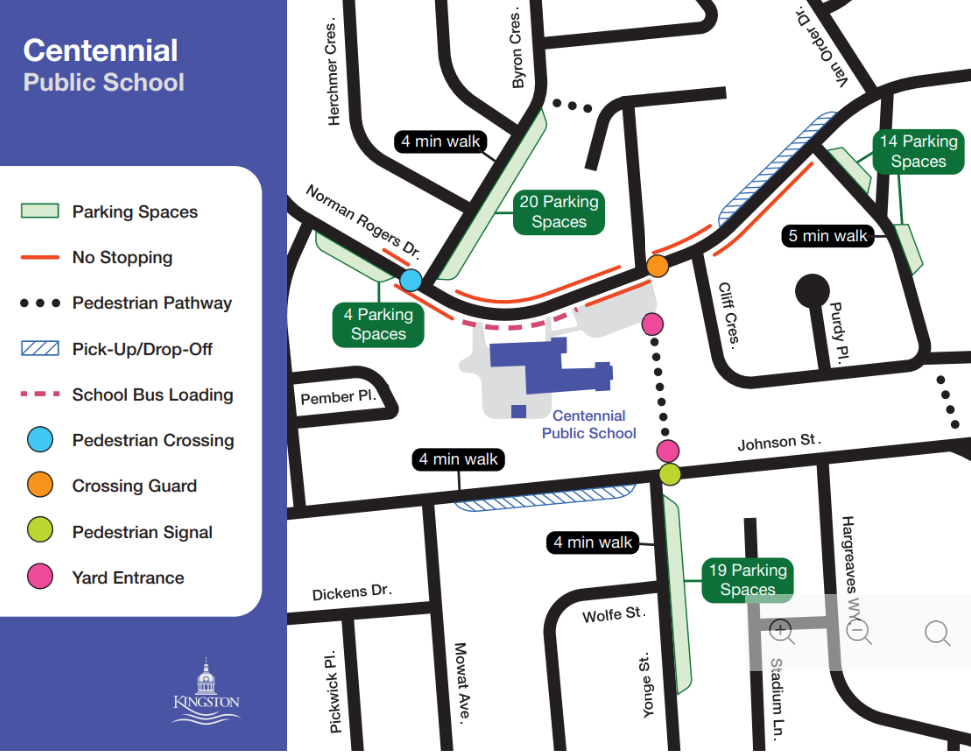
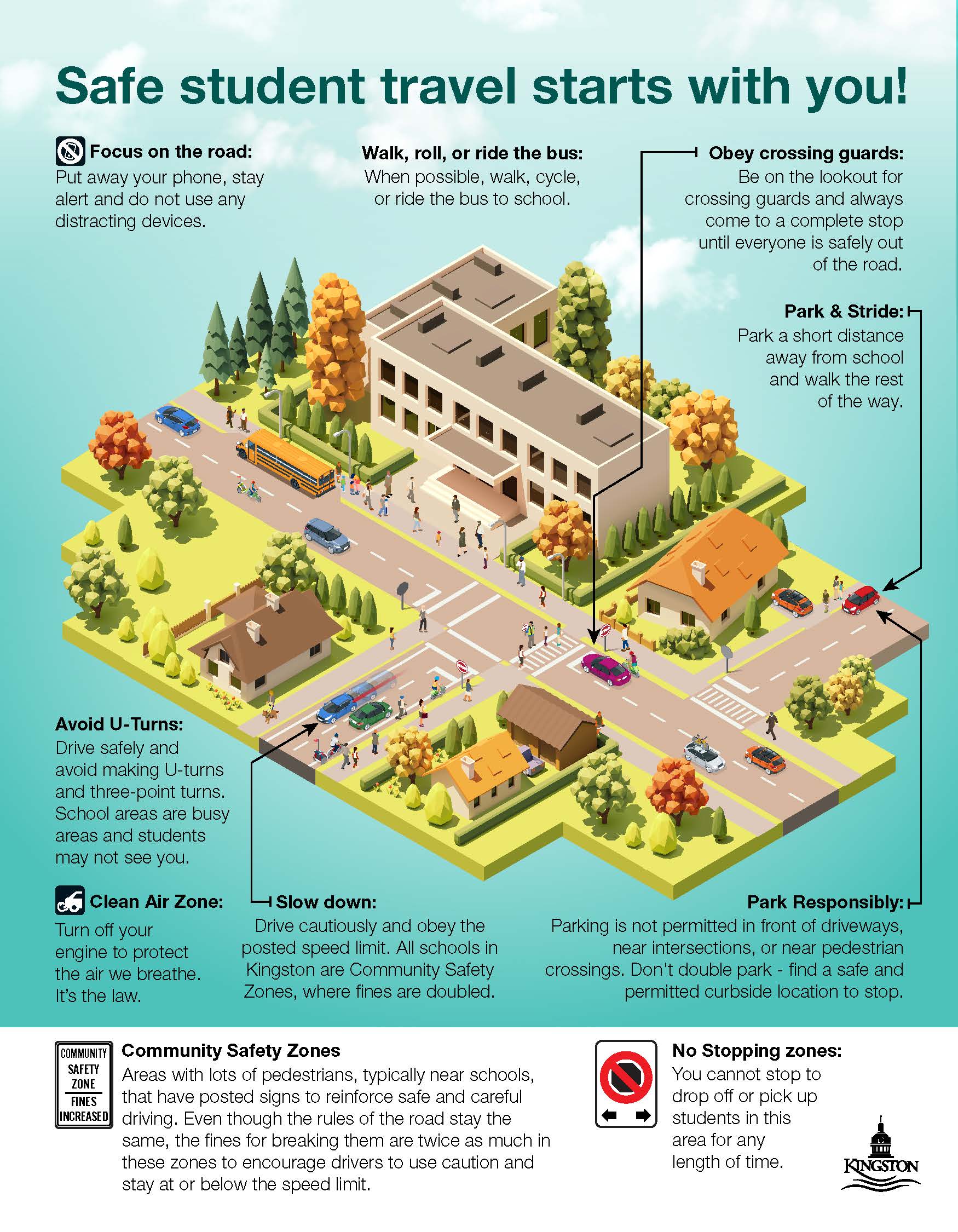
- To support efforts to reduce traffic congestion and improve driver awareness, please see the Park & Stride map. This map shows areas where cars can park and where families can walk to access the school grounds.
- Park & Stride encourages parents and caregivers to park a short distance from the school and walk or roll the remainder of the route, helping to reduce vehicle volumes
In addition, updates to parking regulations in the school area have been completed to better support safe pick-up and drop-off operations. New parking signage reflecting these changes will be installed as part of the project.
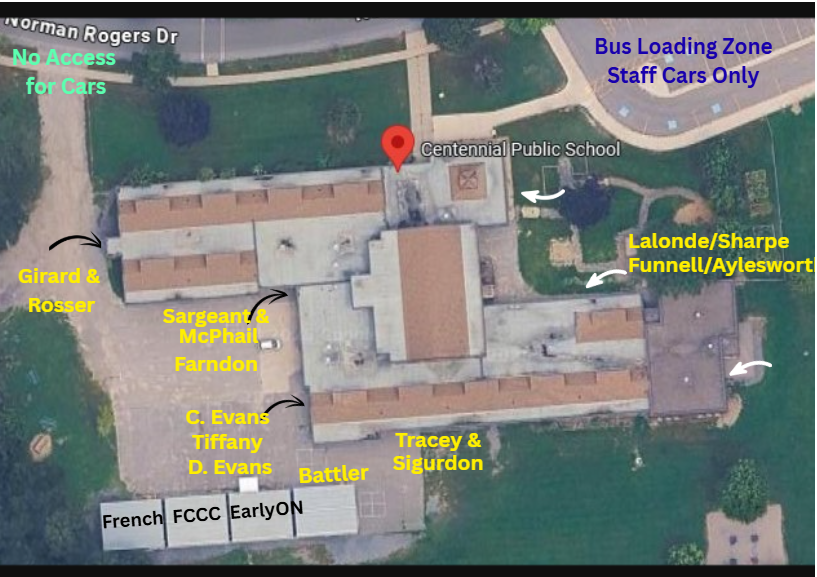
🚫 Parking Lot Access
To protect our students during high-traffic times, the school parking lot is
closed to parent and guardian vehicles.
Only school buses, vehicles with accessible parking permits, and staff vehicles are permitted entry. This helps reduce congestion and keeps pedestrian pathways clear and safe. We truly appreciate your cooperation in keeping our school community safe.
🚶 Morning Drop-Off
Parents/guardians may walk students to the yard, where supervision begins at 8:50 a.m. We kindly ask that families drop children off at the gate, allowing students to walk independently to their designated zones.
👋 Afternoon Pick-Up
Please arrange to meet your child in the same location each day.
If your child is walking home with siblings or older students, help them plan a consistent meeting spot. Older students will exit through their designated doors and walk around the outside of the building to meet younger siblings.
📞 Connecting with Teachers
Teachers are focused on student safety during drop-off and pick-up, so we ask that families please respect that the educators are responsible for the safe dismissal of all children in their care and may not be able to engage in a conversation with you about your child during this busy time. If you need to speak with your child’s teacher beyond a daily check-in, please arrange for a meeting or phone call with the teacher.
🚲 Active Transportation Encouraged
Whenever possible, we encourage families to walk or bike to school. Bike racks are available at the front of the building.
🚌 Bus Transportation
Families eligible for bussing will receive details from Tri-Board. You can log in to the Tri-Board portal to view stop locations and times. Bus-delays and cancellations are also
🚗 Vehicle Drop-Off Options
If you’re driving your child to school, please observe city parking signs and consider using one of our nearby walking paths. For student safety, the access gates to the yard must be secured during the school day.
School Day Schedule
Time | Activity/learning block |
|---|---|
8:50 to 9:05 a.m. | Supervision begins on the yard |
9:05 to 10:45 a.m. | 100-minute learning block |
10:45 to 11:25 a.m. | Recess and nutrition break |
11:25 a.m. to 1:05 p.m. | 100-minute learning block |
1:05 p.m. to 1:45 p.m. | Recess and nutrition break |
1:45 to 3:25 p.m. | 100-minute learning block |
Safe Arrival - Reporting a Student's Absence
For more information on how to report an absence please watch the videos below.
COMMUNITY MENTAL HEALTH SUPPORTS
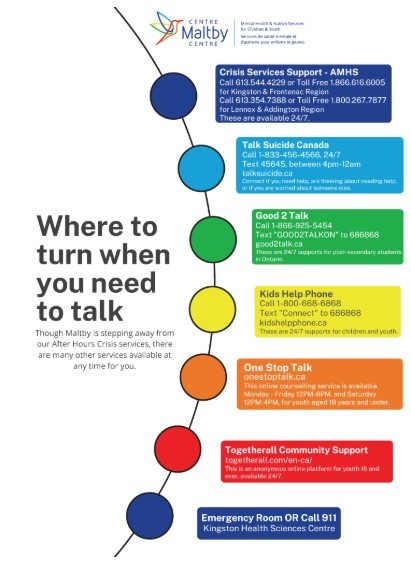
Support is available in the community for families who may be looking for additional support for their student(s). Please see some of the available resources below.
Reaching out to a trusted adult, family member, friend, or support professional can also make a meaningful difference when someone is struggling. Encouraging help-seeking and connection can be an important protective factor for students.
- Kids Help Phone – Call or text 988 for 24/7 support across Canada
- Kids Help Phone – Text CONNECT to 686868 or access live chat at kidshelpphone.ca
- Maltby Centre (March 17 Kingston Walk-in Clinic; March 18 Sydenham Walk-in Clinic)
- One Stop Talk – Call 1-855-416-8255 or connect online
- Resolve Counselling Services in Kingston and Napanee
- One Roof Kingston (ages 12 to 25)
- Lennox and Addington Youth Hub (ages 10 to 24)
- In an emergency, call 911 or visit the nearest emergency department

Upcoming Dates:
- December 4-12: Hanukah
- December 4: Jingle Bell Walk
- December 9: Big Bear Creek Land Claim Anniversary
- December 21: Winter Solstice
- December 24: Christmas Eve
- December 25: Christmas
January
- January 4: National Ribbon Skirt Day
- January 15: Birthday of Guru GObind Singh Ji
- January 29: PA Day
February
- February 6: Lunar New Year
- February 7-March 8: Ramadan
- February 10: Ash Wednesday
- February 12: Term 1 Report Cards & COLs to Families
- February 14: Have A Heart Day / National Day of Remembrance for MMIWG2S+
- February 21: International Mother Language Day
March
- March 9: Anniversary of the Longwoods Treaty
- March 9-10: Eid-ul-Fitr
- March 20: Nowruz (Ismailis) / Nowruz / Spring Equinox / Two-Spirit Celebration & Awareness Day
- March 21: Naw-Ruz
- March 22: Holi / World Water Day
- March 22-23: Purim
- March 26: Good Friday
- March 29: Easter Monday
- March 31: National Indigenous Languages Day
April
- Anniversary of the Simcoe Deed / Treaty 3½
- April 14: Vaisakhi
- April 21-29: Pesach/Passover
- April 21-May 2: Ridvan
- April 22: Mother Earth Day
- April 23: PA Day
- April 30: Holy Friday
May
- May 5: Red Dress Day / National Day of Awareness for MMIWG2SLGBTQQIA+ Peoples
- May 10: Bear Witness Day / Spirit Bear's Bearthday
- May 16: Eid-al-Adha / Moose Hide Campaign Day
- May 19: Anniversary of the McKee Treaty of 1790
- May 20: Wesak
- May 31: PA Day
June
- June: National Indigenous History Month
- June 3: Anniversary of the Final Report of the National Inquiry into MMIWG 10-12: Shavuot
- June 6: Anishinaabe Giizhigad / Anishinaabe Day / Blue Jean Jacket Day
- June 14-15: Ashura
- June 21: National Indigenous Peoples Day
- June 25: Term 2 Report Cards & COLs to Families
- June 29: PA Day
LDSB 2026-2027 School Year Calendar & Upcoming Dates
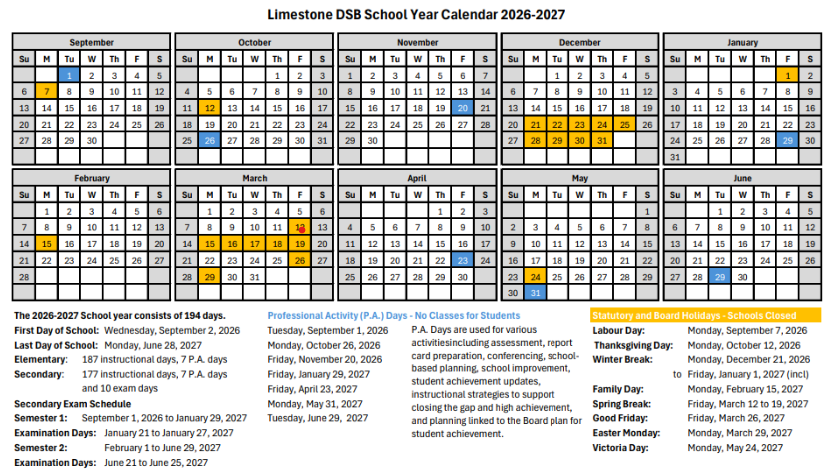
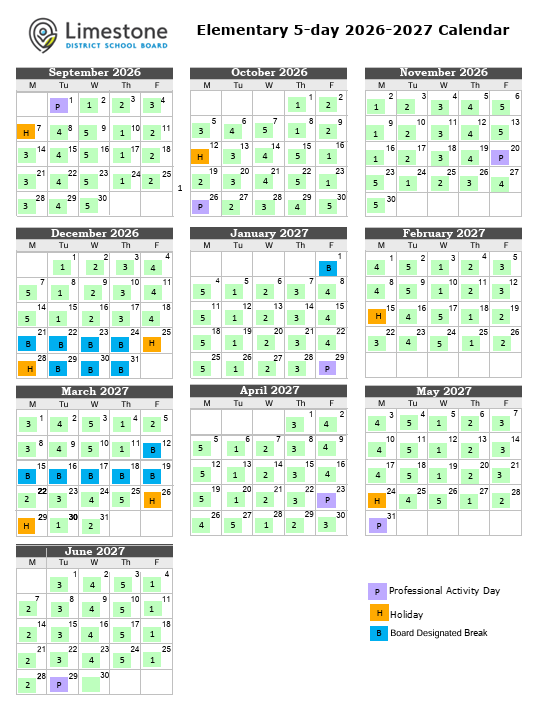
Dates of Significance
The Limestone District School Board is dedicated to promoting human rights, equity, diversity, and inclusion for all staff and students. We celebrate the diversity of our community and recognize the importance of significant dates throughout the year, offering opportunities to learn about the religious, cultural, and awareness days observed within our district.
LDSB prioritizes dates that impact learning, ensuring these events and observances enhance students' educational experiences. By focusing on these dates, we aim to foster meaningful learning, reflection, and engagement, while integrating them into the curriculum. Learning resources are continually developed and made available to educators for classroom use.
The following dates highlight secular and creed-based observances and holidays, significant events and celebrations, public holidays, and other important dates. Please note that the list is not exhaustive and may be updated as needed. Please follow the link below to access dates of significance each month.
LINK: Dates of Significance
EXCITING NEWS!!! Centennial School Clothing has a new look! Orders can be delivered directly to Centennial. Check it out and ORDER HERE!


CommunityPartners:

Maltby Centre

Eye See, Eye Learn Eye Glasses Program
Eye See...Eye Learn® Program - Ontario Association of Optometrists

Bus Information for Parents
How to Apply for Transportation - Tri-Board (triboard.ca)

Kingston Public Library
Kingston Frontenac Public Library | Information Inspiring Imagination (kfpl.ca)

Community Living Kingston & District
Community Living Kingston & District - We’re here to help lead the way. (myclkd.ca)
School Messenger: Reporting Your Child's Absences
Centennial uses School Messenger to help communicate need-to-know information to families in a timely and efficient way via text, voice message, or email. Families can access School Messenger on a laptop, iPad or mobile phone. Most families find it very useful to download the School Messenger App.
Centennial also uses School Messenger to share out our weekly newsletter which contains extensive school information with families via text, phone, or email message. Our school will also use this tool for urgent items like event cancellations or school emergencies about school council meetings, or special events.
Registered parents/guardians will receive these messages through contact information that is collected in our student information system. This information is exchanged via a secure connection between the school board and SchoolMessenger. This is the same system that also allows parents/guardians to report their student’s absence in advance, or report back to the school regarding an unexplained absence.
Parents/guardians may choose how to receive these alerts by text message, email or phone call, with the exception of emergency events or attendance calls which will always be communicated via all contact methods on file with the school.
It is important that parents/guardians ensure schools have the most up-to-date contact information at the beginning of the school year. If your contact information changes during the school year, parents/guardians are asked to contact the school with the updated information.
School Messenger also allows teachers to communicate directly with families via a group message option. Teachers who choose to use this tool will provide families with a code so they can sign up for these messages, all available within the SchoolMessenger app or website.
The easiest way to have access to all these tools is to set up a SchoolMessenger account. We encourage you to create a SchoolMessenger account on your desktop, laptop, tablet and/or download the SchoolMessenger app. While an account is not required to use these new tools, it will allow you to review your contact information and communication preferences, and it stores all of your messages in one place.

Webinars for Parents - School Mental Health Ontario
Supporting Your Child’s Well-Being, a free webinar series created with parents/caregivers, for parents/caregivers. Each session will dive into important mental health and substance use health topics identified by families in Ontario - guided by subject matter experts who offer practical, evidence-informed strategies.
For full details on speakers and topics: SMH-ON | By Your Side Free Webinars | Blog
Can't make all dates? No problem! Select one or more of the sessions when you sign up.
Learning at Home: Resources include stories, games, and activities that you can engage in with your child to build literacy skills, grow confidence and offer connection time with your child.
See theRESOURCES PAGE HERE
Taking time every day to read or do a learning activity with children is crucial to a child’s development, improving a child’s literacy skills dramatically, and can help a parent improve their skills as well.

